10 Tips for Bringing the Garden’s Beauty into Your Home
Creating a sanctuary doesn't require a greenhouse or vast estate. It starts with looking at the botanical beauty already within your reach. That might mean displaying bouquets of fresh flowers or interesting houseplants. Those never go out of style. But here are a few more ideas to bring the natural world into your home.
A Fancy Forest Floor
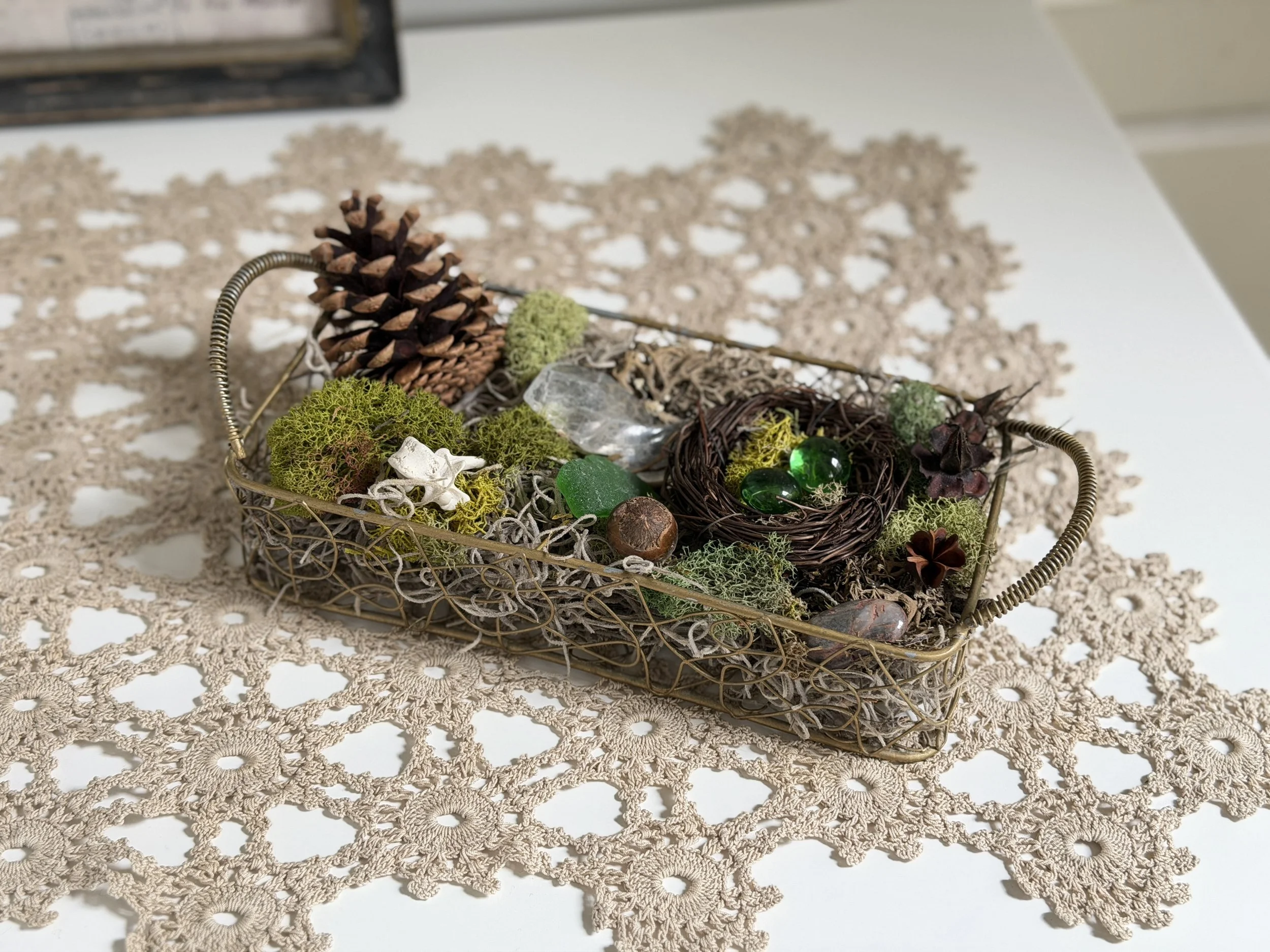
You can create a miniature earthen landscape by arranging moss and natural objects in a fancy porcelain dish, rustic wooden bowl, or aged wire basket. A vessel with a flat bottom usually works best. First, lay down a bed of moss or paper grass (found at a craft or thrift store). Add a few smooth stones, a tiny piece of driftwood or sea glass, and various dried seedpods, pine cones, twigs, pearls, marbles, and whatever feels right.
Once finished, this can serve as a centerpiece of natural beauty on a dining or coffee table, to be enjoyed at any angle.
The Storied Book Display
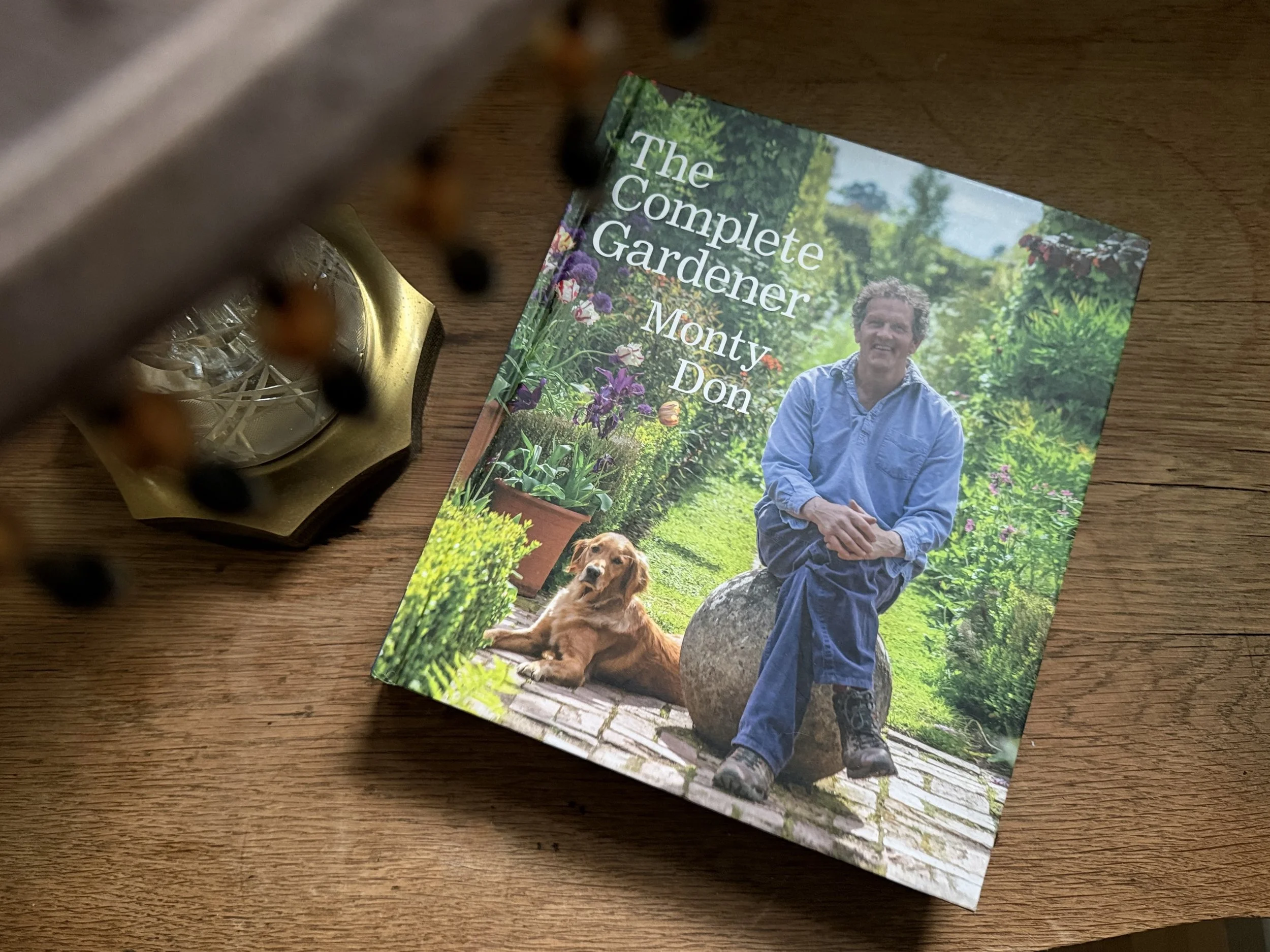
Books are the original botanical galleries. Instead of shelving a favorite gardening book spine-out, pivot it outward and lean it against the back of a shelf or prop on a stand. Or display while opened to a luxurious photo of a colorful garden. This turns the book into a soothing piece of art.
I do this with my beloved book, The Complete Gardener, by Monty Don. It’s always on my nightstand. Sometimes I display it on a small easel, sometimes I lay it flat and open it to a cheerful garden scene. Every night before I turn out the light, I get a warm feeling when I catch a glimpse of Monty and his dear sweet dog, Nell, sitting in the garden.
I hope these ideas help you find a moment of peace today. If you’re looking for that one little masterpiece to anchor your room, be it a hand-painted porcelain plate or botanical painting, consider exploring my latest finds.
Kindly yours,
Kaja
Antique Floral Jewelry
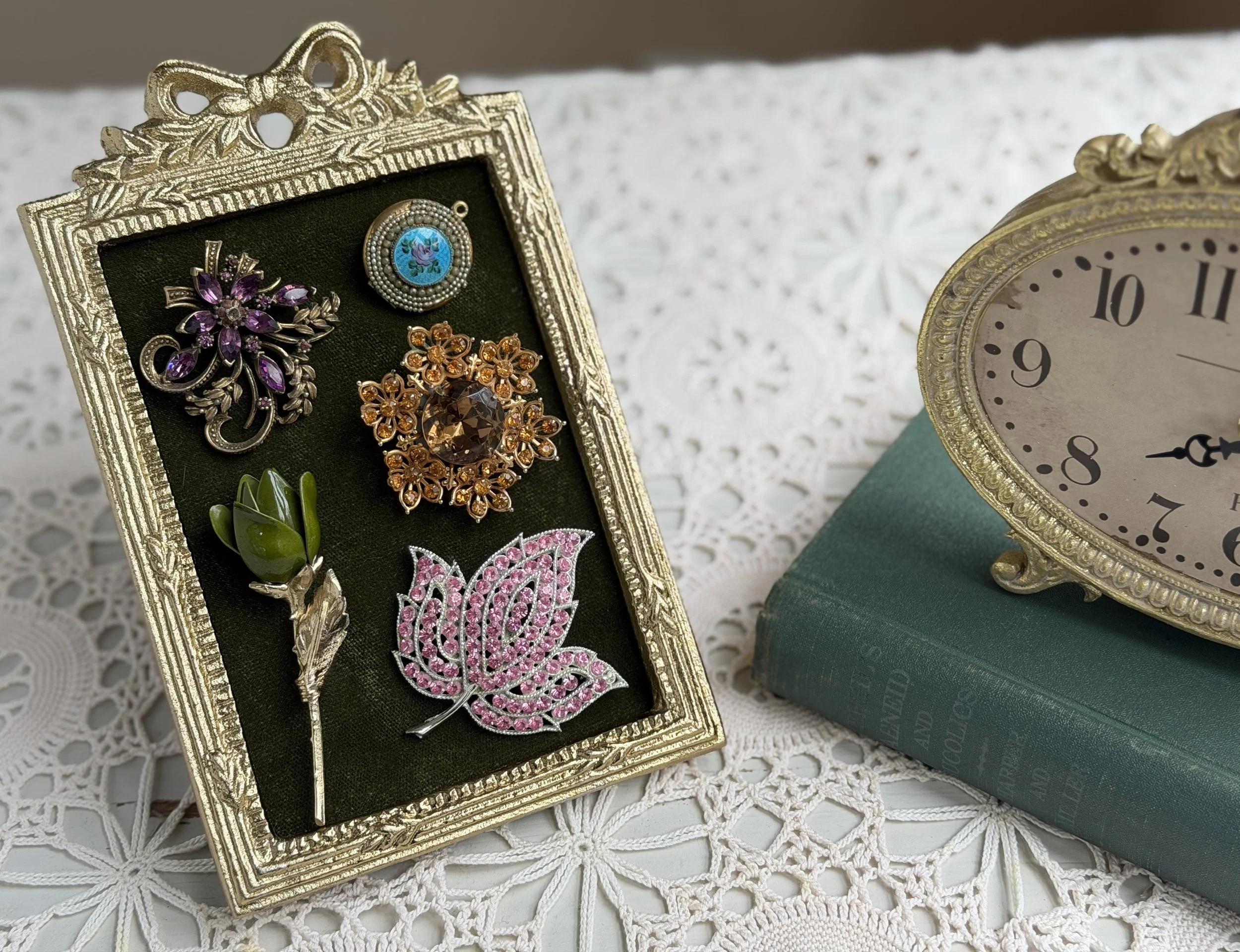
Nature has always been the greatest muse for jewelers. Back in the 1930s and ‘40s, brooches and earrings were often decorated with flowers or vine motifs. Now, if you find some floral pieces from your grandmother’s collection or a thrift store, you can display the costume jewelry as 'tiny art.'
Pin a floral brooch to a scrap piece of velvet and frame it in a traditional, wood or fancy, metal frame. If you’re pressed for time, you can simply tuck them into your favorite pin board. It’s a way to let your family’s history bloom alongside your home’s botanical story.
The "Found" Specimen Under Glass
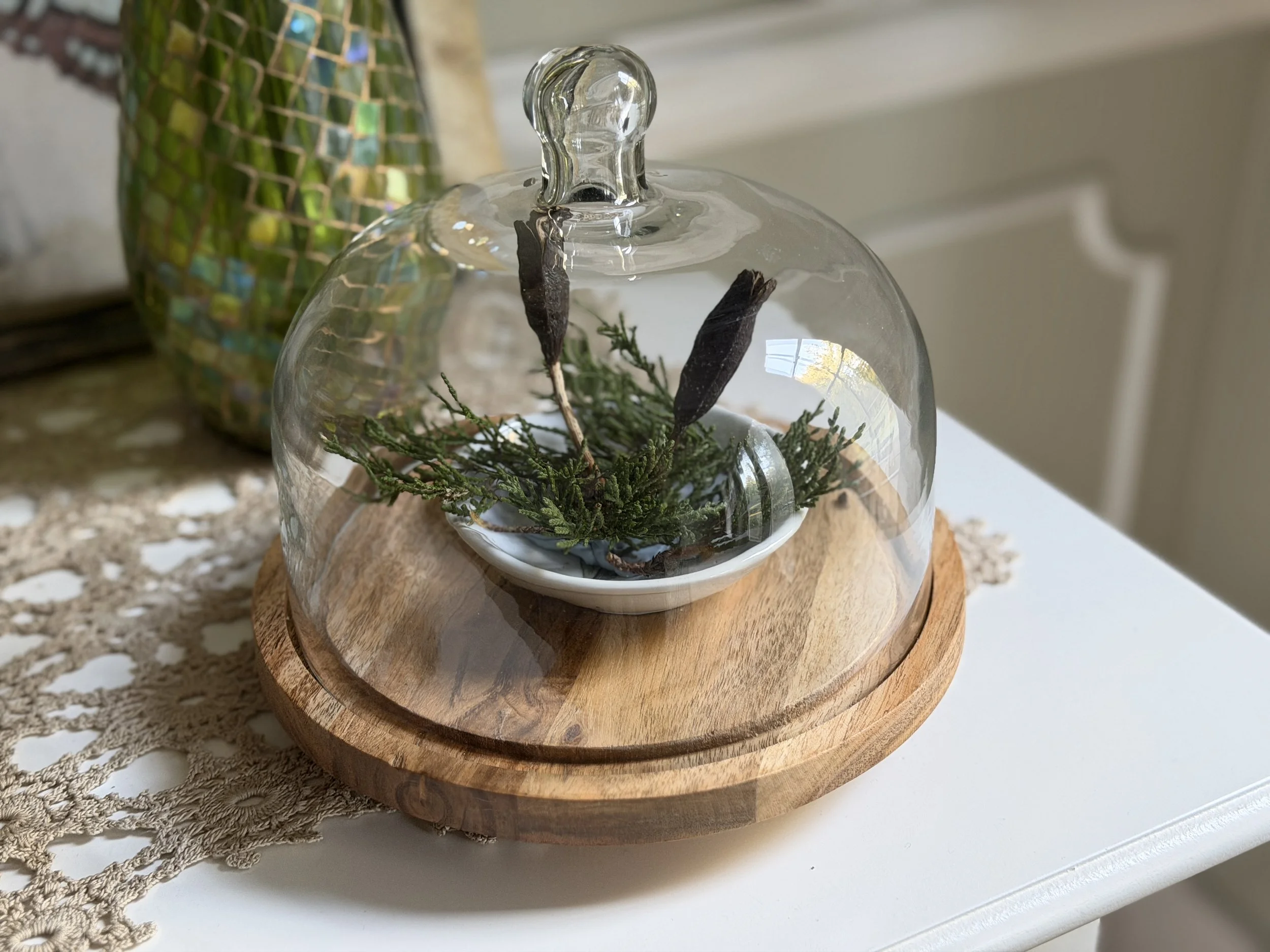
In the Victorian era, people were obsessed with displaying specimens of plants and animals. So consider displaying interesting plants under a cloche. Look for "skeleton" plants in the garden or at a home store. A dried allium head, a gnarled piece of grapevine, or a couple of dried seed heads, like these irises below. They all can be elevated into art.
Take an old cheese dome or wooden lazy Susan, set your specimen in a dab of soft clay, museum putty, or even glass marbles in a small bowl, and position it or them in the middle. Set the glass cloche over it. This turns a humble, outdoor discovery into a silent, storied artifact.
A Botancial Illustration
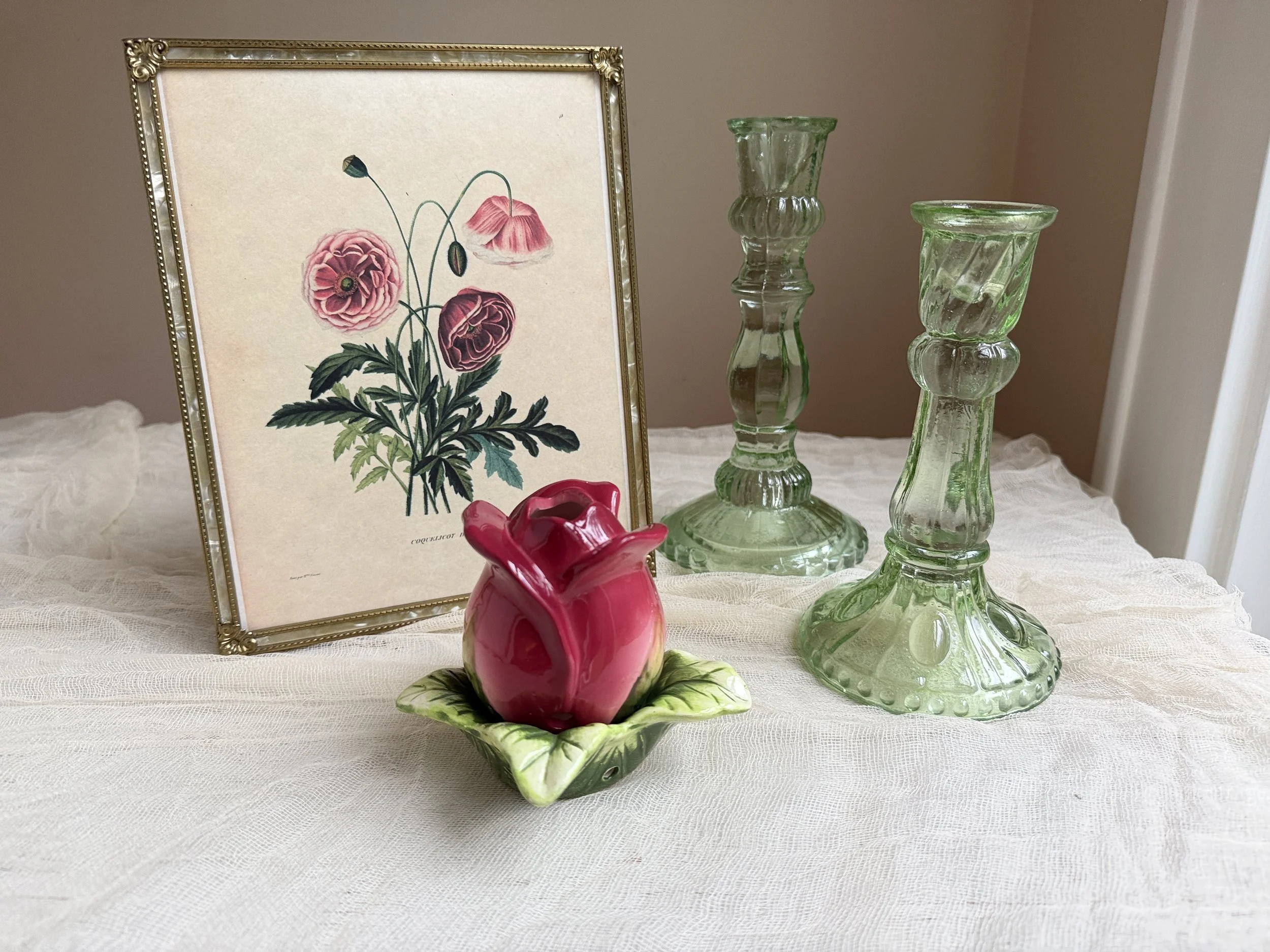
Similarly, in the early 1800s, botanical exploration was at its height and artists of the day painted plant specimens new to Europe. These illustrations were wildly popular. Of course today, if you want to display an antique flower illustration, you’ll have a hard time finding a botanical book from that era. But you can find images online. Sites like the Biodiversity Heritage Library’s Flickr account or Freepik have hundreds of free botanical illustrations you can print out. Cream or tan paper looks most authentic.
When featured in a thin, distressed frame, a botanical print can feel like a historic heirloom. Black, gold, or wood frames decorated with fine lines mimic antique French prints. If a frame isn’t possible, you can simply line up a variety on a bulletin or magnetic board. It’s a low-cost way to create a gallery wall that feels like a natural history museum.
Sparkly Plant Starts
There’s an understated beauty in a tidy row of plant starts in quilted, crystal jars. Instead of hiding stems in opaque vases, use clear apothecary, empty spice, or half-pint quilted crystal jars to water-propagate pothos, begonia, or geranium cuttings. Choose an odd numbered for the collection like 3, 5, or 7 and set them on a ledge for a simple, spotlighted look.
When the sun shines through the water, the “quilted” glass will diffuse it into either a soft glow or interesting patterns of shadow and light depending on the strength of the rays. Either way, your little plants will glow with cheer.
An Ink and Leaf Study
Use the outside world as a printing press. First, choose a textured leaf like fern, oak, or Japanese Maple. Then paint a piece of cardstock paper with a strong tea solution (3-5 bags to half-cup water). Let dry. Later, with a very thin layer of dark ink or watercolor paint, paint the leaf’s underside. Press onto the paper and cover with a sheet of wax or plain paper. Roll firmly with a rolling pin, then carefully peel back the paper.
The result will be a DIY "Nature Print" that looks like an original field study. You can place the finished print on a shelf behind your miniature forest floor centerpiece to complement the natural elements.
The Twilight Cage
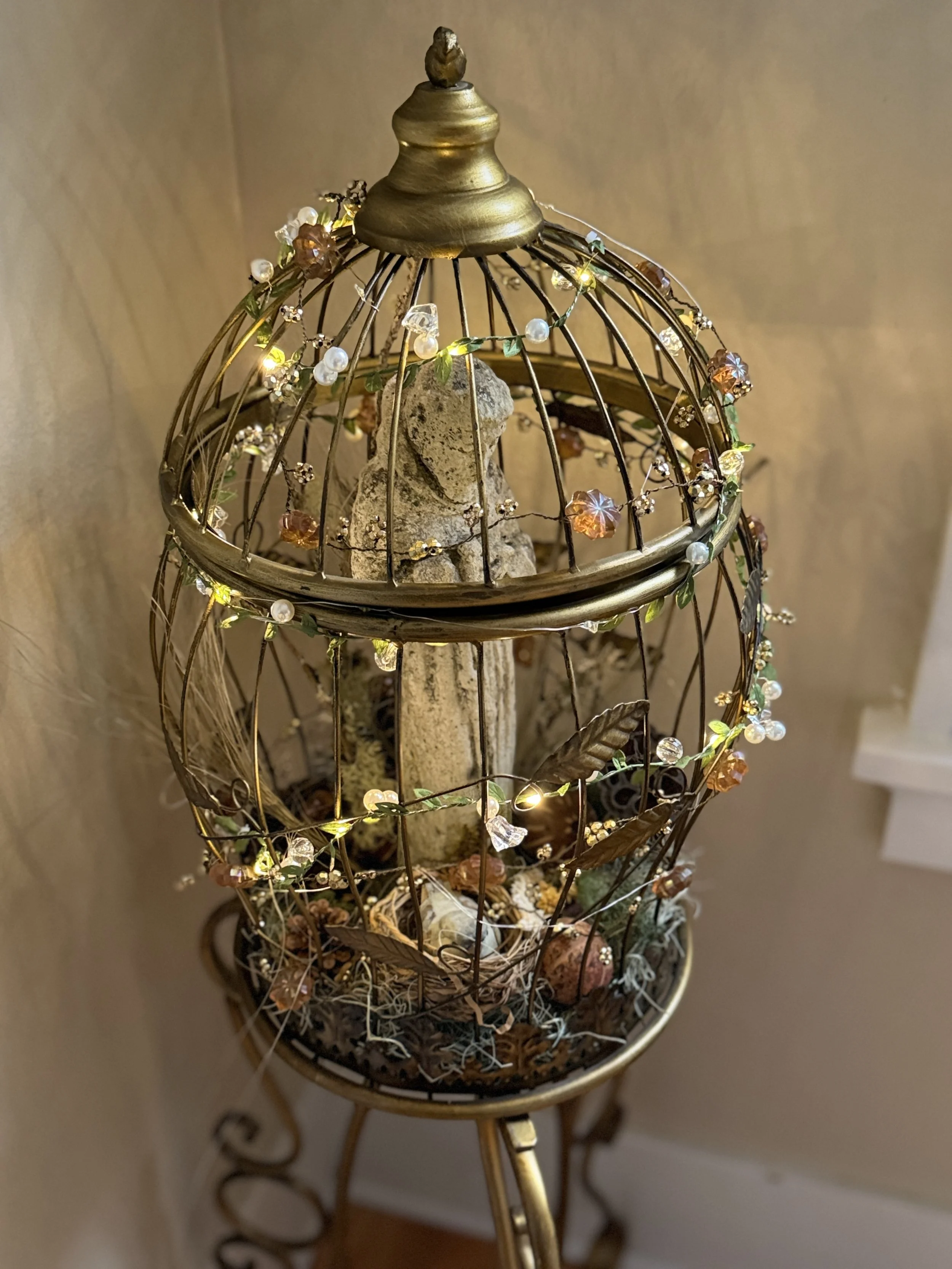
For a more vertical element on a buffet or desk, dress up a decorative birdcage. Nowadays, fairy lights with faux leaves are commonly available in craft stores. First, scatter dried leaves or decorative moss on the bottom of the cage. Place a small stone statue or sculpture inside, something weathered or worn, or anything that evokes history like an old watering can or iron fleur-de-lis. Then weave a string of leafy fairy lights through the bars.
The light will catch the sculpture’s texture and cast botanical shadows, making your room feel like a garden at dusk. Here’s St. Francis watching over the birds.
A Floral Plate as Art
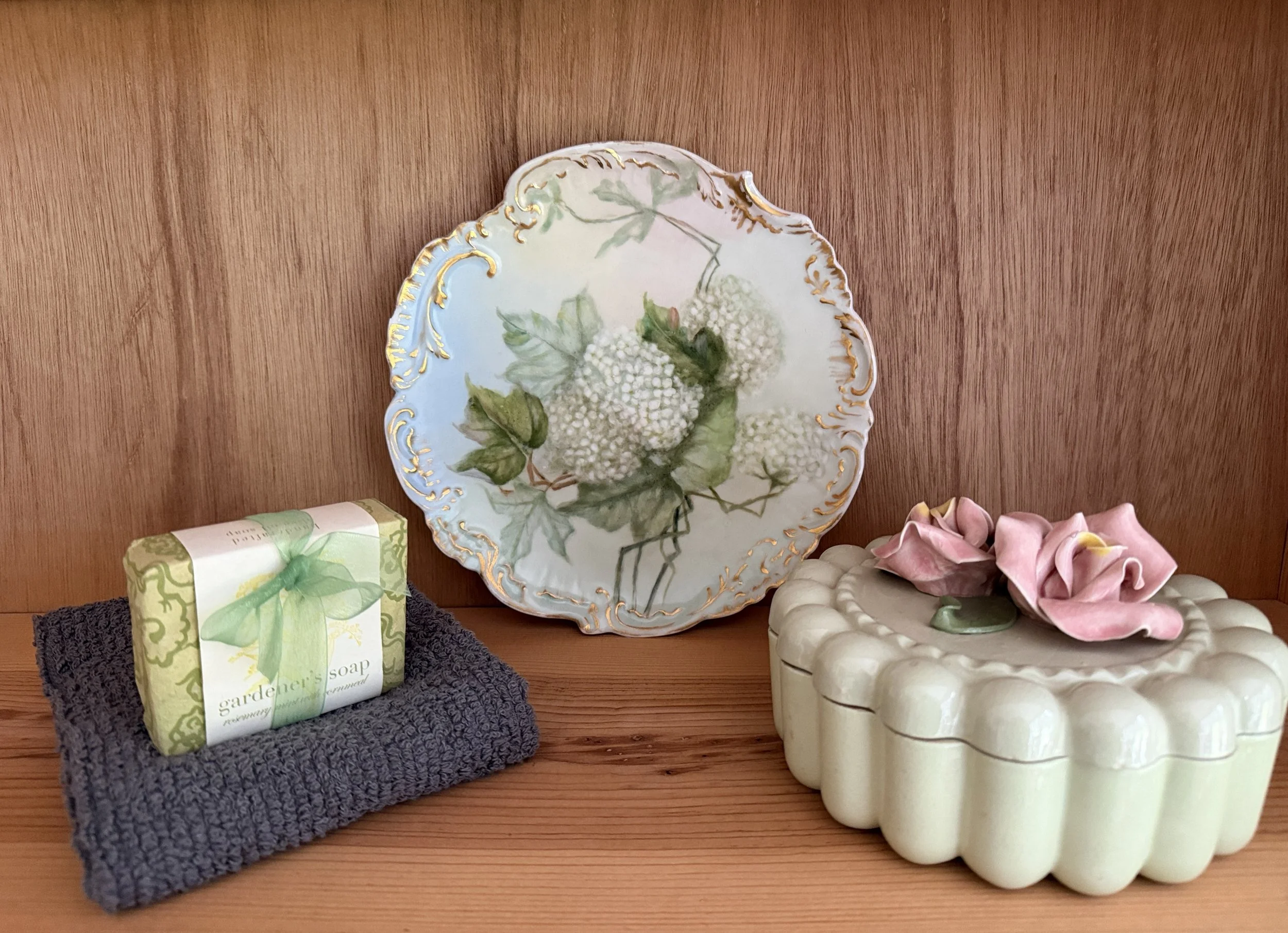
Displaying plates became a common habit of fancy ladies in the 19th century. While now it’s sometimes overdone, displaying an interesting plate in an interesting way can stand out. For instance, place the rich colors of a JPL France still life on a floating, white shelf for a clean, minimalist look. Or tuck in your favorite Portmeirion platter into a gallery of mirrors, plant sketches, and travel postcards.
You can also position the plate on a bookshelf next to your favorite novels or hang one solo on a narrow patch of wall. It brings a permanent "bloom" to a space that lacks light, like this wooden bathroom cabinet below.
The "Patina" Bouquet
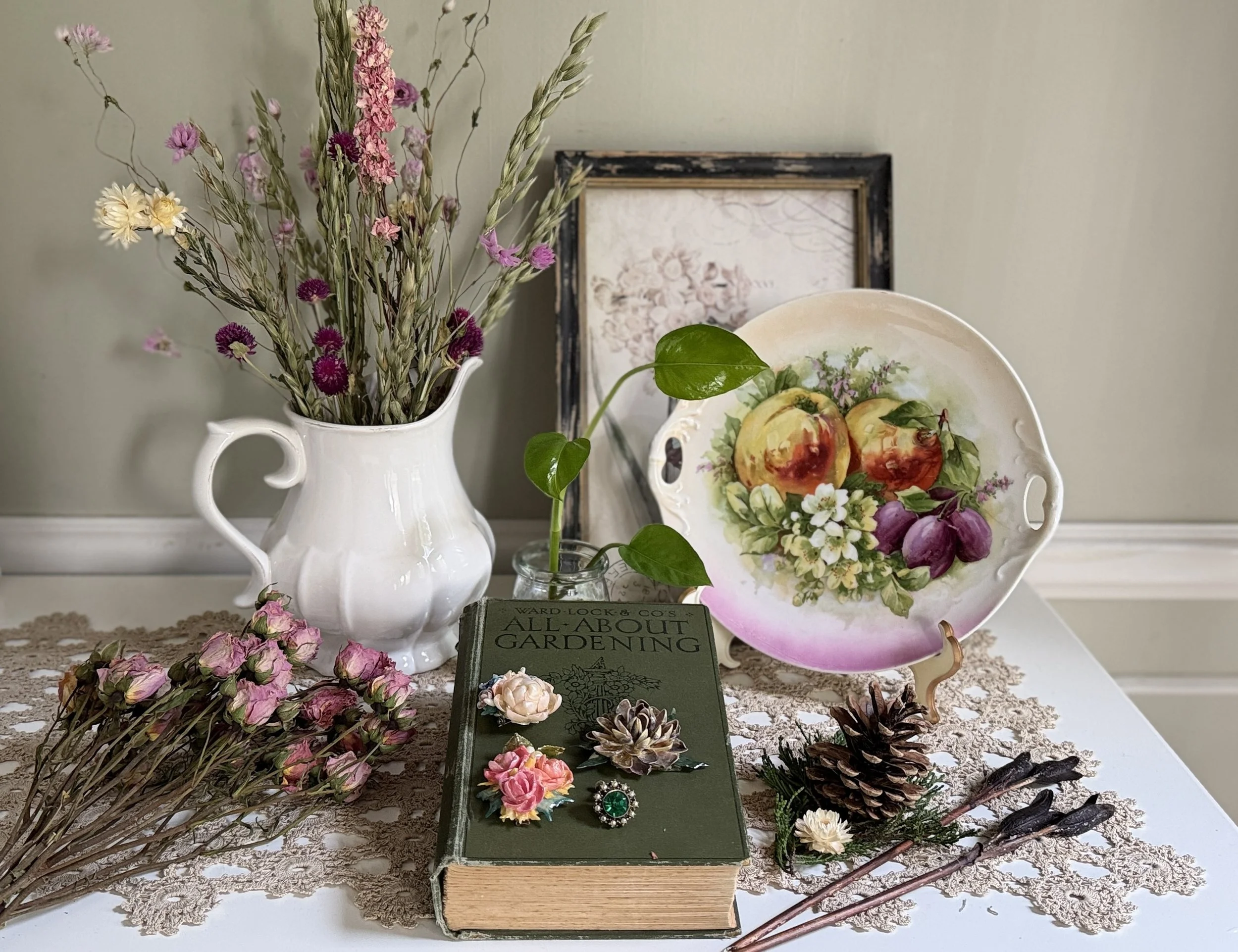
Don't toss those grocery store roses or hydrangeas when they start to turn. Strip the leaves and hang the flowers upside down in a dry, dark spot for a couple weeks. Once they’re papery and muted in color, place them in a enamelware pitcher or mason jar (see top photo). If you want a French touch, put them in a metal urn or weathered stone planter. These fading flowers become botanical sculptures that last all year.
Also, when your grocery store herbs (like rosemary, thyme, or lavender) start to wilt, tie them with a simple piece of twine and hang them from a kitchen cabinet knob or a hook. This evokes a "French Kitchen" artifact and keeps the garden scent alive in your home long after the fresh herbs are gone.