The Best Gardening You Can Do in Winter is Nothing at All
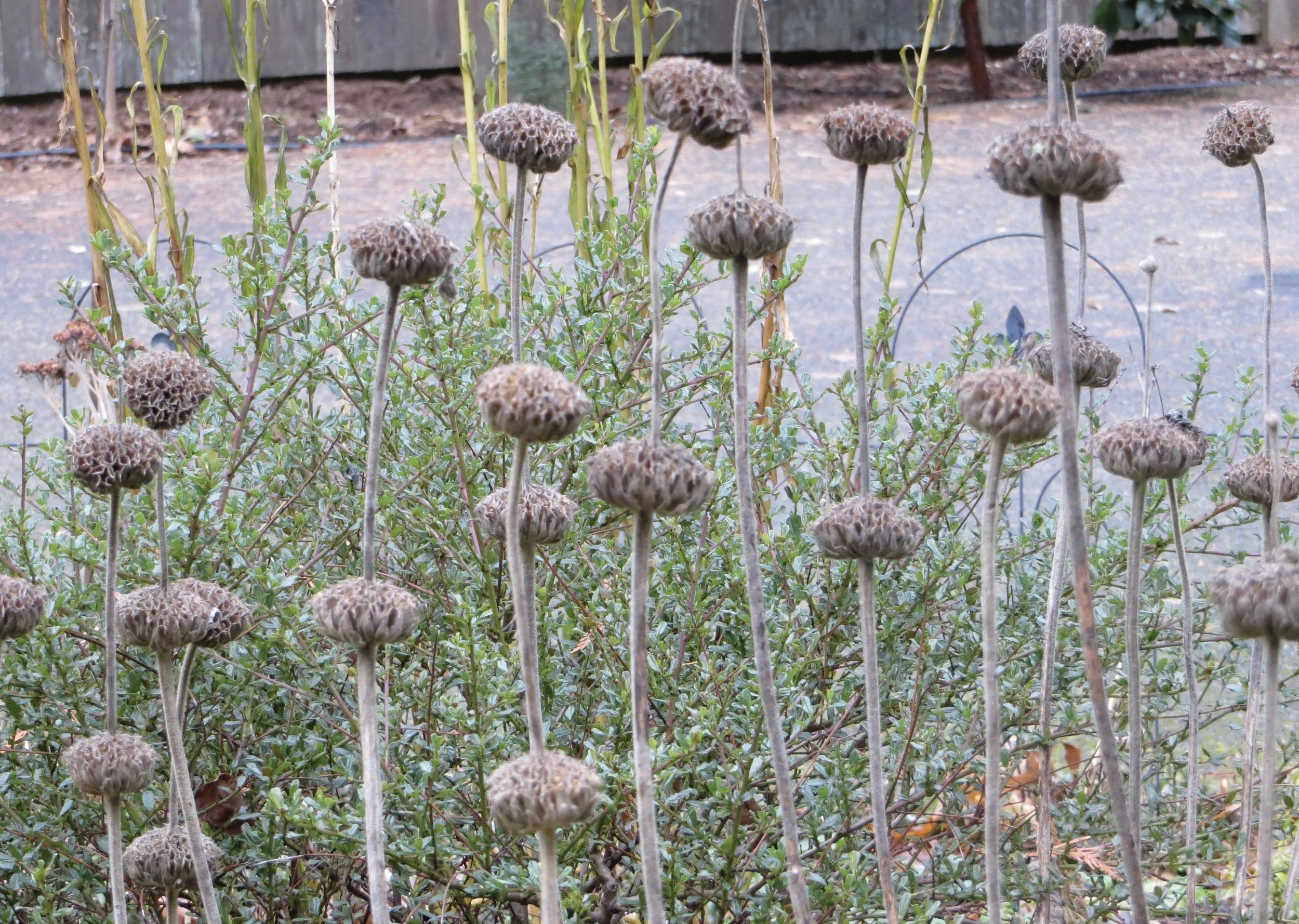
Dried seed heads of Jerusalem Sage in the garden
In our human, neighborly world, you may feel a lot of pressure to "put the garden to bed" in autumn. We might trim, rake, and clear every brown leaf until the soil is as bare and tidy as a freshly swept hallway. But dried flower heads, ornamental grasses, fallen leaves, and dormant shrubs provide seeds and cover for all kinds of wildlife. So if you missed your annual fall clean up this year, don’t fret. Your lack of tidying up actually did your little backyard’s ecosystem a huge favor.
Life in the Soil, Life in the Hollows
Many beneficial insects rely on the refuge of fallen plant material. Bumble and mason bees sometimes burrow under chunks of bark or leaf matter in the ground. Butterfly caterpillars and moths cocoon beneath maple leaves. Fireflies lay eggs in damp soil beneath plant debris.
Similarly, when we leave the hollow stems of milkweed, golden rod, Joe-Pye Weed, and coneflowers standing, we aren't being lazy, we’re providing a nursery. Many of our native bees like mason and leafcutter bees spend the winter tucked inside those very stalks. If I were to take my shears and "clean" the garden today, I’d be tossing next summer’s pollinators into the compost heap.
What looks like a "mess" to a passerby is actually a luxury hotel for the creatures we’ll be wishing for come June.
The Bird’s Winter Pantry
Every early morning in my winter garden, crows, robins, black-capped chickadees, Townsend warblers, and blue jays swoop into the large island bed I call the 3Bs Garden (Bees, Butterflies, and Birds). They flit around and sing their pretty songs. They feast on the dried coneflowers, Black-eyed Susans, coreopsis, bee-balm, Jerusalem sage, and verbena. With their ample flower heads, these plants dry into a rich smorgasbord of food sources.
These birds don’t care if the garden looks a bit ragged. They only care that the seeds are still there. If I had rigorously cleaned up, who knows how far they’d have to fly to find a meal. What’s more, this is easier than filling a feeder with a bag of seed. Eventually, the feeder empties and you have to replenish. Plus, the seeds can attract rats. By planting plants birds can forage, you give them a gift that grows and spreads and hence, provides more food every year.
A Practical February Edit
If your inner perfectionist is frowning at the sight of an unkempt garden, here’s my "professional-yet-lazy" compromise:
The "Donut" Method: Clear a small, tidy circle around the base of your favorite trees or right along the edge of your stone paths. It gives the appearance of order while leaving the vast majority of the "mess" (and insects) intact.
The Standing Buffet: Only cut back the plants that are truly floppy or mushy (think hostas, hardy geraniums). Anything with a stiff, upright seed head stays.
One for Me, Two for Them: Clip a few of those architectural seed heads off each plant, and leave the rest for the birds, then display your winter bouquet in a pitcher or vase.
Creating the "Sanctuary" for Everyone
I often talk about our old home being a sanctuary for us, but a true Jardin & Patina sanctuary includes the wild things, too. There is something deeply poetic about the fact that by doing less, by allowing our hands to rest and our gardens to stay "messy,” we’re actually doing more for the ecosystem.
It’s a different kind of "art de vivre." It’s the art of letting go.
So in February, the most helpful thing a gardener can do is nothing at all. Let the stalks stand. Let the leaves lie. Let the garden be a little wild, a little worn, and very much alive.
Does your inner perfectionist struggle with the 'art of letting go' in February, or have you found peace in the grit and the gray? Let’s talk about the beauty of the un-tidied life in the comments below.