The New Artifact: Making Art that Feels Like History
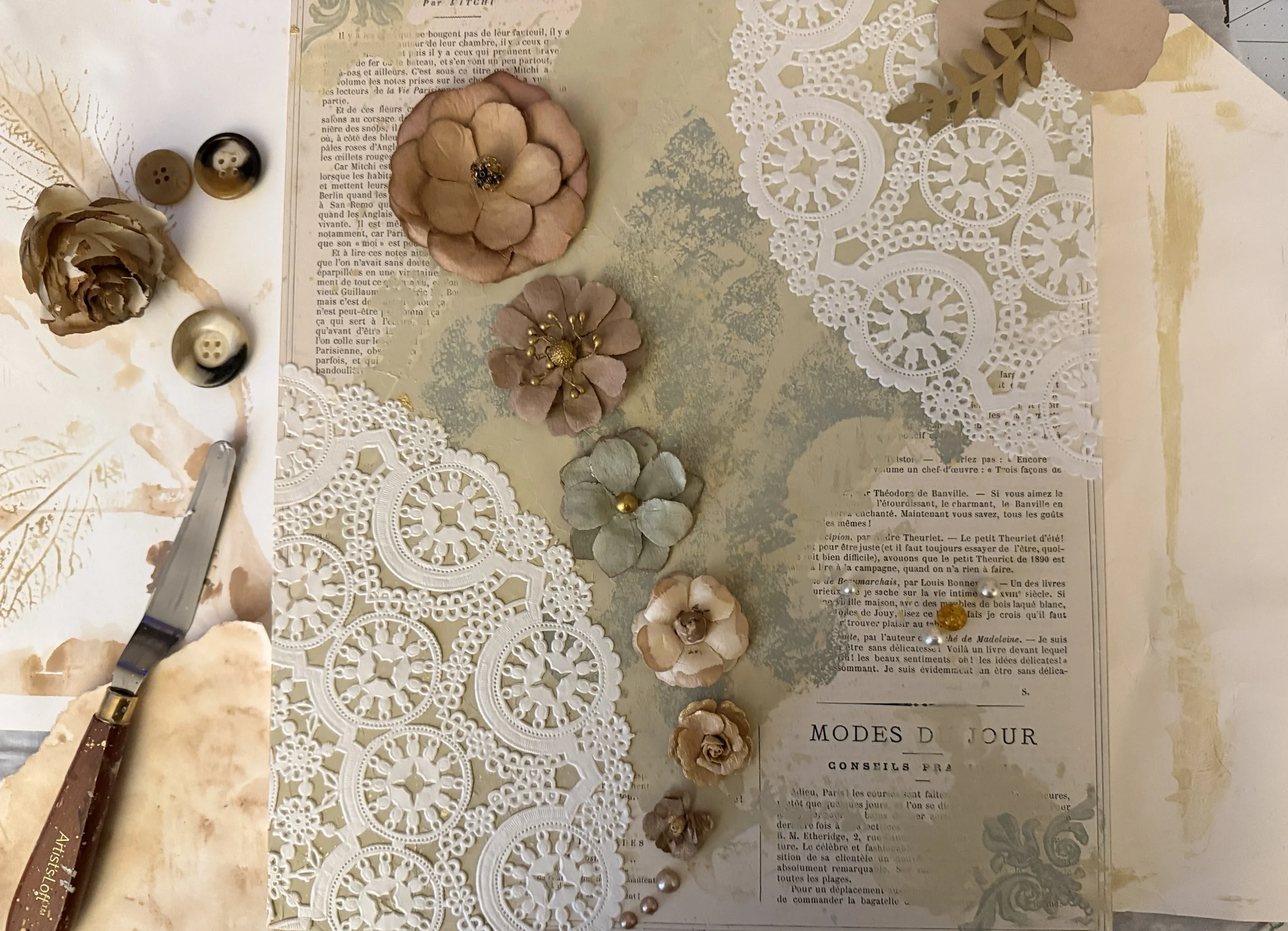
I use textured paint, antique newspapers, and 19th-century poetry when starting an art piece.
I must be an old soul. I’ve always been drawn to historic, vintage, and weathered things. Things that tell a story, things that are a little worn, things that have a sense of mystery. So when I started making art, I often incorporated history into my pieces without realizing it. I painted my background with tea and sprinkled in bits of Romantic era poetry or prose. Sometimes old French newspapers. Aged botanical imagery was often a focal point.
For a while, I didn’t know what I was doing, I just created what made me happy. What I thought was beautiful to look at. But when an acquaintance asked me what my art was like, I said they were like little artifacts, only…new.
A New Artifacts Philosophy
True antiques are harder and harder to come by. And if you want something European looking, you have to find a specialty store or go to Europe itself and shop. So I figured why not follow my passion and create something new that connects our current human experiences to those from centuries ago. I feel the same way about heirloom garden plants. They’re the stalwart varieties passed down through generations.
The Anatomy of the Artifact
When I start a “New Artifact,” I try to make a Foundation that feels aged. Whether I’m using texture to create a plaster-like background or writing out Proust in French, the historical connection is the first chapter of the artwork’s story.
Then comes the Palette. I work with what I call The Colors of Time: sepia, charcoal, dusty sage or olive green, and faded ochre. These aren't just pigments. They’re the hues I see in weathered stone, dried leaves, and old parchment.
Finally, there is the Subject. My work is deeply rooted in the 19th-century Herbarium—the Victorian practice of pressing plants to preserve their memory. When I create, I’m essentially planting pieces of a garden into my art, whether that’s pressed leaves, dried flowers, or plants made from paper, fabric, or natural elements. I love to capture the fleeting greenery and beauty of a garden sanctuary in lasting art.
Why This Matters Now
In these mid-2020’s, our homes are our sanctuaries, and we need artwork to bring us peace more than ever. Bringing in botanical, historic artwork to a space provides an anchor that offers the soothing imagery of plants and mystery of history.
I believe art should be a sensory, tactile experience, which is why I work with mixed media. I love the idea of anyone reaching out and feeling the varying textures of my work, much like how you run a hand along a garden gate or velvety leaf. It’s about creating a physical as well as emotional and intellectual connection.
Ultimately, my intention in creating New Artifacts is to create something beautiful for the eye. If the viewer of my pieces slows down and enjoys the moment, I’ve been successful. I want people to look closer, breathe deeper, and appreciate the beauty in the aged and natural worlds. Relax and enjoy. Art is, after all, a beautifully dreamy thing that fills the soul.