How to Style Corner Shelves with Antiques, Books and Greenery
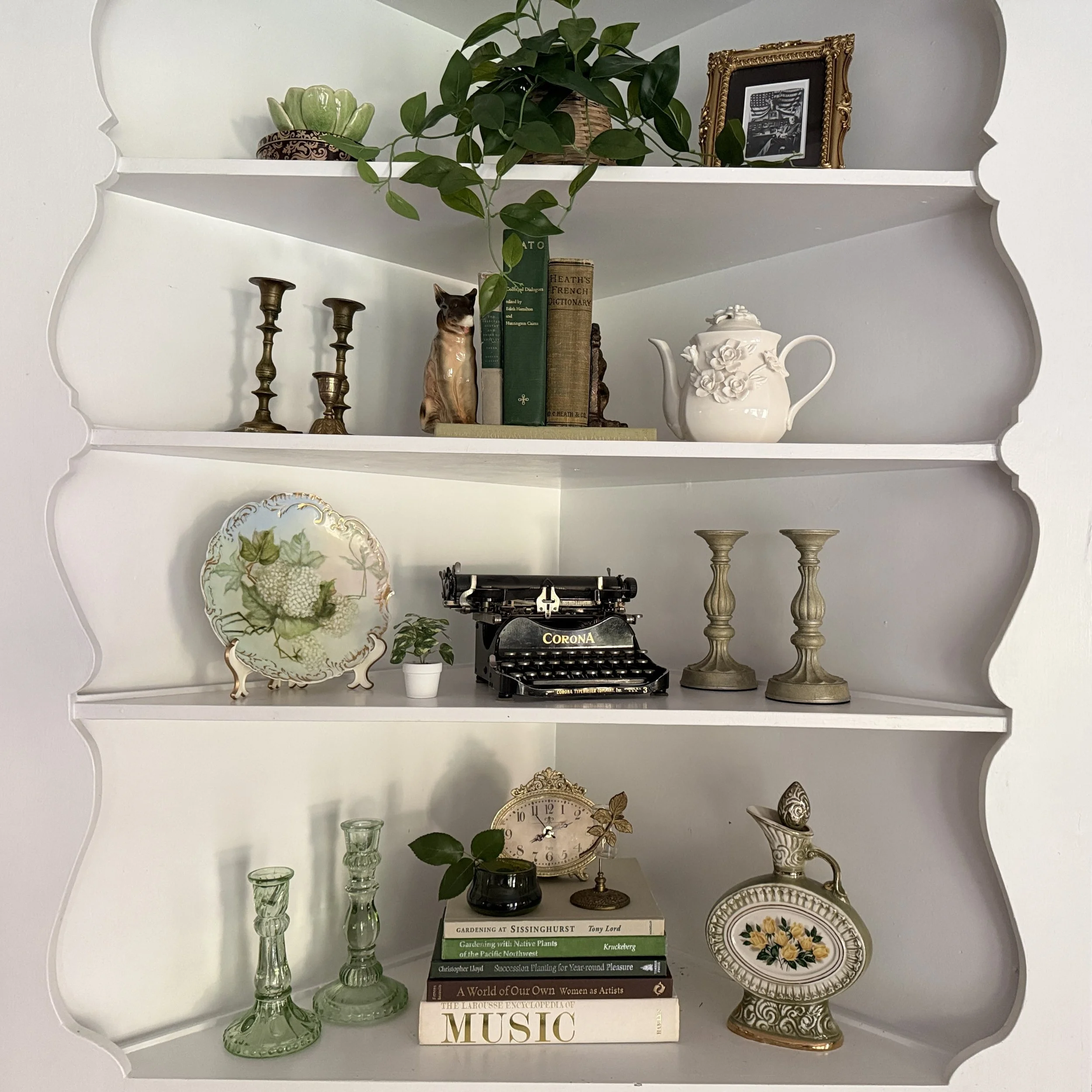
Sets of candlesticks create a zig-zag pattern and a motif of greens, browns, and cream create cohesion on a corner shelf.
If you have a historic home with built-in, corner shelves, you have a blessing but maybe also a challenge. While the shelves may offer charm and some practicality, they also can spawn frustration. You don’t have a consistent depth to the shelf. The front is brighter than the back. The shelf heights may not be adjustable.
So how do we decorate these awkward spaces? I’ve found some traditional styling rules apply and others don’t. Here’s how I resolved these issues for my 1922 home.
1. Decide on a Motif
Before you set anything in place, pick a theme, style, or motif. Are you a modernist? Eclectic? Traditional?
I love old homes and decorate to match my house’s 1920s era. Therefore, I lean on antiques, books, heirlooms, photos, and a touch of greenery. Still, we need repeating patterns or shapes that pull the eye through the shelves. The easiest way to do this is through color. For a traditional look, I use a palette of muted tones. Faded red, beige or brown, moss green, black, and brass or gold accents evoke an old-world feel.
In my dining room, I have white, corner shelves. This is an advantage and then not. The white color creates a clean, neutral background but also feels stark. So I try to soften it with old books that have cloth covers in earthy hues, warm botanical plates, greenery or flowers, and fancy frames with pictures of relatives.
2. Create a Rhythm
To create a cohesive rhythm, interior designers often recommend zig-zagging three large items throughout the shelves. Large or visually heavy pieces can include weighty books, an antique birdcage, a terracotta bust, antique typewriter, or weighty, stone crock. To use the Zig-Zag Rule of Three, you place a heavy object on an upper shelf on the left, then another below on the right, then another below on the left.
But I’ve found in corner shelves this is difficult to do. You don’t have as much space at the edges. So sometimes, I center one visually heavier object in the center of every other shelf. If I do this, I’ll change the object but keep the colors similar. In the above photo, I chose three collections of candlesticks to zig-zag instead.
3. Choose a Soulful Focal Point
Every collection needs a heart. On the shelf that sits at eye level, I recommend placing your most cherished heirloom. That way you’ll enjoy seeing your most beloved object most often. It will give you a good feeling when you notice it. For me, that might be my grandfather's 1920s typewriter or stack of favorite gardening books. This is your focal point.
To give that object an even greater visual "pop,” place something unexpected nearby. If your shelf is mostly neutral, a single vase in a vibrant blue or a book with a deep burgundy spine acts like a blooming flower in a huge hedge. It draws the eye and makes the whole arrangement sing.
4. Repeat the Shapes
Cohesion comes from repetition. If you have a round antique clock, look for other circular elements to tuck into the display: a small round magnifying glass, a decorative bowl, or a botanical plate. Even framed prints can tie a scene together. I sometimes use heirloom photos. Lastly, similarly shaped, framed mirrors are great for reflecting light.
By repeating these shapes or images across different levels, you create a sense of rhythm that feels intentional and calm.
5. The "Jardin" Connection
To me, a shelf without a plant feels a bit cold. To soften the hard, 90-degree angles of a corner unit, tuck in a trailing plant like a Tradescantia or pothos. Let the vines spill over the edges of the shelf. You can also cut a leaf from your garden and lean it into a short vase (see photo). Remember, it’s okay to use faux plants too, especially if you don’t have a lot of light. Faux plants still remind us of the outdoors and that reminder helps our bodies relax.
Tip: Use a "Patina" vessel for your plants. A weathered basket, tarnished bowl, or small stone urn makes the plant look like an artifact itself.
A Final Thought for a Soulful Nook
As you decorate your shelves, consider blank spaces. An empty area is just as important as a filled-in one. You don't have to decorate every inch. In a simple house, we leave room for the light to hit the walls. If a shelf feels crowded, take one thing away and let the remaining pieces breathe.
Lastly, keep having fun and playing with it all until the arrangement finally feels right. This one small scene will boost your mood whenever you pass by.